ThePersonalityLab
/Methodology

How we measure,
in full.

Every instrument we ship is documented to the APA Standards for Educational and Psychological Testing and the International Test Commission Guidelines. Below is the catalogue, the theoretical basis behind each instrument, sample items, and the reliability / validity targets we hold ourselves to.

Full technical manuals — including item structure, factor analysis, criterion validity, and measurement invariance — are available on request before any contract is signed.

Big Five, Enneagram & DISC — how we combine them →
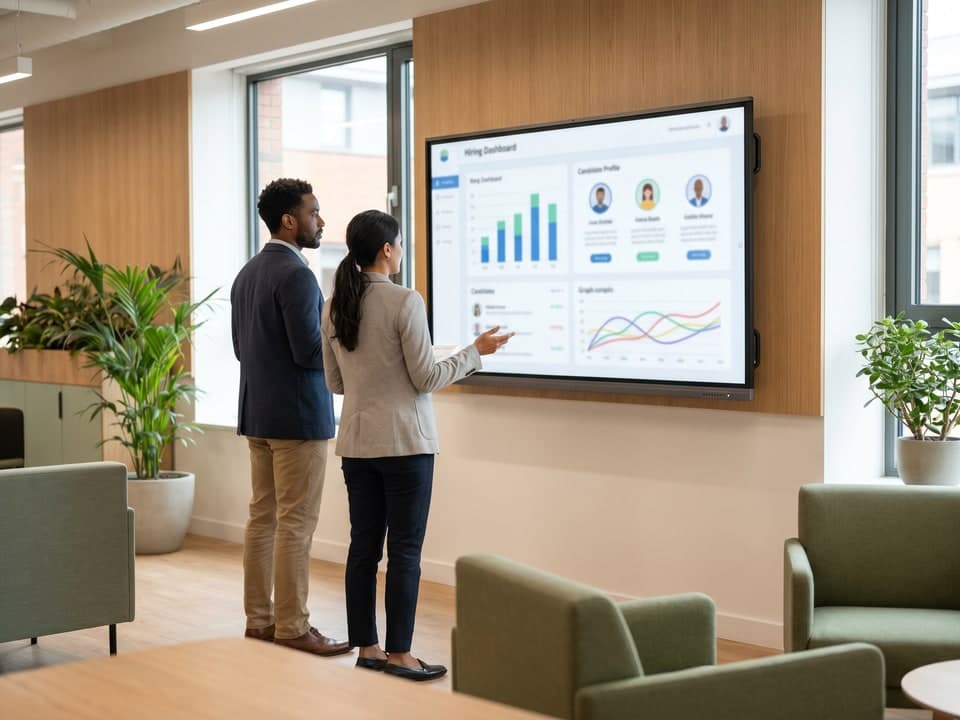
Talent team reviewing candidate psychometric profiles on a monitor

i.01

Big Five (FFM)

Costa & McCrae (1992); Goldberg (1993)

Coverage: α reliability .87–.91 across traits · convergent validity r > .70 against IPIP-NEO

The five-factor model is the most validated taxonomy of personality in modern psychology. Five orthogonal traits — Openness, Conscientiousness, Extraversion, Agreeableness, Emotional Stability — explain the bulk of stable variance in adult personality and predict job performance more reliably than any other broad personality framework.

What we administer

100 Likert-scale items, balanced between forward and reverse-keyed statements. Administered in 10 minutes. Items are evenly distributed across facets so we can decompose each trait into its components for executive coaching and team-level analytics.

How we score

Raw scores are translated into percentile rankings against locale-specific norms. We never report 'types' or thresholds the candidate has 'passed' — only continuous percentile scores and the standard error of measurement, so consumers of the report can reason about confidence.

What we validate

Internal consistency (α), test-retest reliability over 8 weeks, convergent validity against published Big Five inventories, criterion validity against supervisor-rated performance, and measurement invariance across age, gender, and language.

Sample item

I follow through on commitments even when nobody is watching.

Forward-keyed Conscientiousness item · 1 (strongly disagree) — 5 (strongly agree)

i.02

HEXACO Honesty-Humility

Ashton & Lee (2007)

Incremental validity over Big Five for CWB: ΔR² ≈ .07 (Lee & Ashton, 2018)

HEXACO adds a sixth factor — Honesty-Humility — to the Big Five. It captures sincerity, fairness, greed-avoidance, and modesty, and is the single best dispositional predictor of counter-productive workplace behaviour. We deploy it as an overlay on the Big Five for roles with custodial, financial, or legal exposure.

What it adds

Where the Big Five captures broadly socially-desirable behaviour through Agreeableness, HEXACO Honesty-Humility isolates the integrity-relevant signal. It is the dimension most directly correlated with workplace theft, fraud, and rule-breaking in published meta-analyses.

When we use it

Custodial and financial roles, executive succession, and any context where a single bad actor can do disproportionate damage. We do not deploy it on entry-level requisitions where the legal defensibility of using an integrity proxy is weaker.

Sample item

I would feel comfortable taking credit for someone else's work if I could get away with it.

Reverse-keyed Honesty-Humility item

i.03

Categorical typologies

Enneagram · DISC · four-axis type indicators

Discussed; not deployed as a primary instrument or hiring filter

Not used as a hiring or promotion criterion.

Most corporate teams arrive having already used one of the popular categorical typologies — the Enneagram, the DISC behavioural model, or one of the trademark-protected four-letter type indicators inspired by Jungian typology. We are not in the business of selling any of them, but we read into them where it helps our customers communicate with the rest of the organization. See our dedicated frameworks page for concrete examples of how Big Five, Enneagram, and DISC fit together in a single report.

What they are

Models that sort people into a small number of discrete categories — nine types in the case of the Enneagram, four quadrants in DISC, sixteen four-letter codes in the trademarked Jungian-derived indicators. They are widely used in coaching, team workshops, and L&D programmes.

Why we don't use them as primary

Categorical typologies discard variance: a person near the boundary between two types is reported as one or the other. Independent psychometric reviews of the four-letter indicator in particular consistently report low test-retest reliability — a meaningful share of respondents change category on retest. For hiring decisions, that is the wrong trade-off.

How we integrate

When a team already runs Enneagram, DISC, or a four-letter typology internally, we map our continuous Big Five / HEXACO scores into that language inside the report — so coaches and managers don't have to learn a new vocabulary. The primary measurement stays continuous; the typology label is a translation layer.

i.04

Stress & Resilience — JDC / ERI

Karasek (1979) — Job Demand-Control · Siegrist (1996) — Effort-Reward Imbalance

α reliability .82–.88 across subscales · cross-validated on n > 60,000 in published cohorts

Used for team diagnostics, not hiring.

A workplace-stress instrument grounded in two of the most replicated frameworks in organizational health psychology. Returns a Job Strain Index, a Burnout Vulnerability Coefficient, and a four-quadrant profile (active / passive / high-strain / low-strain).

Why these two models together

JDC predicts stress as a function of psychological demands and decision latitude. ERI predicts stress as a function of effort relative to perceived reward (compensation, recognition, security). Composite scores from both models predict burnout, absenteeism, and turnover more accurately than either alone.

What it is not

Not a hiring instrument. We are explicit with customers: the JDC/ERI battery is for team diagnostics, executive coaching, and post-hire well-being, never as a candidate filter.

i.05

Cognitive style — Chronotype

Horne & Östberg (1976); Roenneberg (2003)

Operational use only · standard Horne-Östberg short form

A short circadian-preference instrument used in shift-pattern, on-call, and follow-the-sun operations. Provided as a non-diagnostic team-fit signal alongside role design, never as a hiring criterion.

How we use it

On-call rotation design, follow-the-sun pairings, and shift-pattern fairness audits. The instrument outputs a morningness-eveningness continuum and a chronotype band. We report distribution across a team — not individual chronotype as a deployment override.

i.06

Custom competency frames

Schmidt-Hunter meta-analytic blends

Tier 1+ engagements only

When the standard instruments don't match your role architecture, we build composite scores tailored to your competency model — weighted blends of Big Five facets, HEXACO factors, and (where appropriate) cognitive ability proxies. Each composite ships with its own short technical manual before it goes live in your funnel.

Example

A 'high-stakes individual contributor' composite for a quantitative finance role might weight Conscientiousness (Diligence + Order facets) at 0.5, Emotional Stability at 0.3, and Honesty-Humility at 0.2 — calibrated against past performers in the role.

What you get

The composite's specification, its construction sample, its incremental validity over the unweighted Big Five, and the threshold-policy options available — all in a document your people-science team can review before you sign anything.

/ Manuals on request

Read the technical manual before you sign.

We send the manual matching your use case ahead of the first call. No commitment. No vendor-form gating.